What customers say
Go Green With SolarSolar design and installation · Savannah, GA
Serving Savannah and nearby towns
Private website concept: Go Green With Solar is a proposed quote-review service, not an operating company. Nothing here is sent anywhere.
Savannah, Georgia
For Savannah, GA homeowners choosing a solar installer. Go Green With Solar is a service that would put every quote on one sheet, line by line: price per watt, production, Georgia Power export credit, permits and contract terms, so you see the better deal before signing. No quotes yet? Use the same checklist.
| Row | Quote A | Quote B |
|---|---|---|
| Headline cash price | $27,500 | $24,900 |
| Solar-only price per DC watt | $2.61/W | $3.04/W |
| Export credit in the savings line | 7.22¢ | 15¢ retail |
| Federal tax credit counted | None | $7,470 |
Cheaper total, dearer per watt. Ask B why.
Checks out Ask the installer Benchmark: EcoGen Georgia $2.78/W (State benchmark, Sept 2026 Edition).
Savannah, Georgia
Go Green With Solar works across Savannah and the Georgia coast, mostly with homeowners who already have a quote and want it read properly. Every number goes on one sheet, line by line, with the missing items marked.
What customers say
Serving Savannah and nearby towns
What we do
Call or visit
| Phone | (413) 427-0175Call to book an assessment. |
|---|---|
| Estimates | Free, in writingDesign and price as separate documents. |
Why homeowners pick us
Our story
Reviewing quotes across Savannah, Pooler, Richmond Hill and the islands.
Where we work
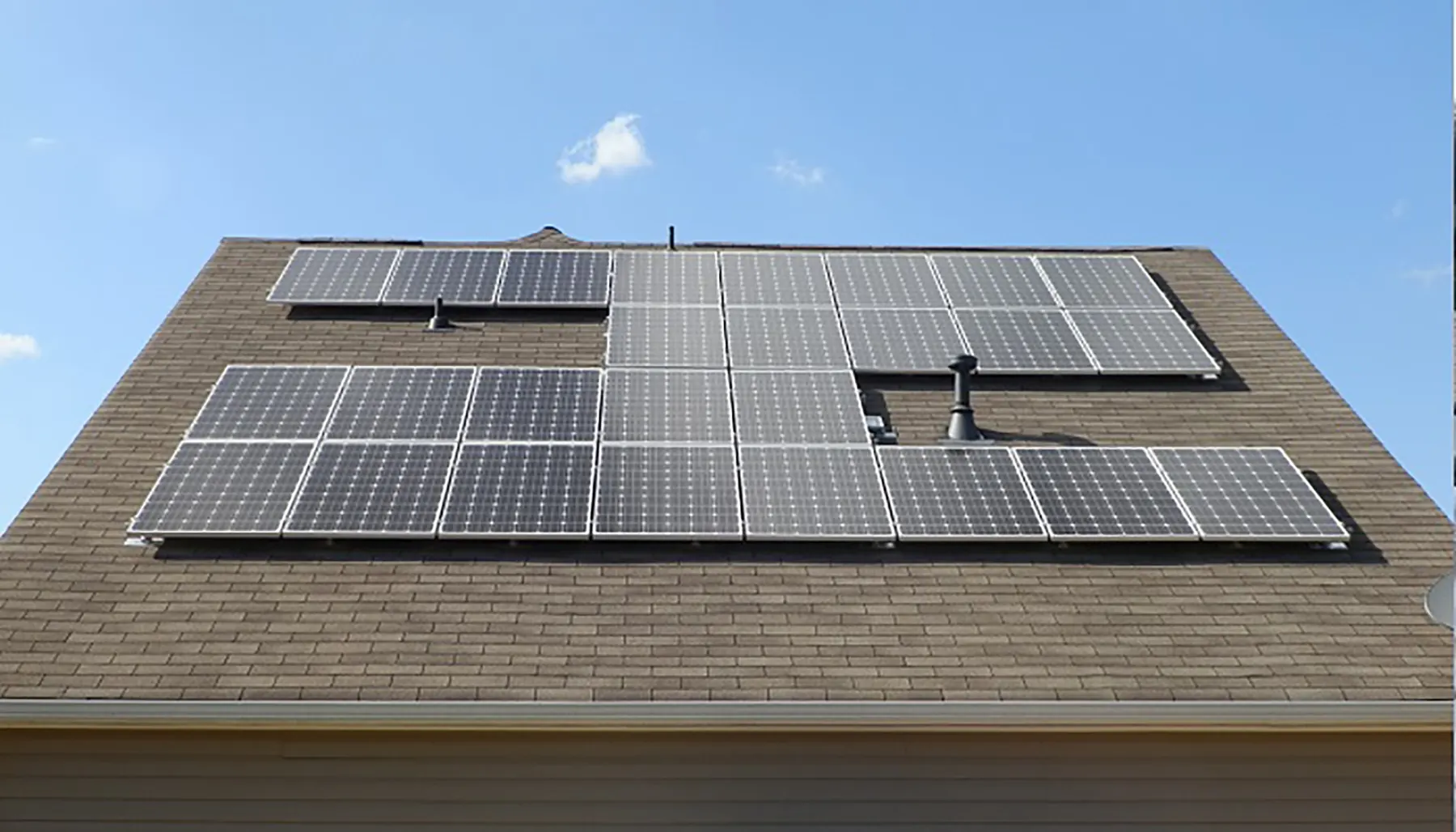
If you are choosing a solar installer in Savannah, GA, the quotes on your table probably don't line up. One leads with a monthly payment, another with a total price, a third with 25 years of savings. Each uses its own system size, its own production guess and its own idea of what Georgia Power pays for the power you send back.
Georgia Power's advice on things to consider before going solar is to get at least three proposals, because pricing and financing may differ for each company. Three proposals help only if you can read them side by side, on the same rows, before you compare prices.
We offers two ways in:
What Path A would put in writing:
| Step | What the review would do | What you'd get back |
|---|---|---|
| 1. Intake | Read each quote, contract draft and bill | A receipt listing what each quote is missing |
| 2. Normalize | Pull the same fields from every quote: DC and AC size, equipment, cash price, extras, financing price | A line-by-line comparison sheet, one column per quote |
| 3. Production check | Compare each yearly kWh claim with a Savannah reference | A production row, plus or minus % against the reference |
| 4. Savings check | Check the export credit, the program named and any tax credit counted | A savings row with corrections |
| 5. Local route | Name the permit office from the parcel and the utility from the bill | A row showing who files what |
| 6. Contract terms | Check workmanship, roof-leak, payment, cancellation, monitoring and removal terms | A contract-gap list: "ask for this in writing" |
| 7. Readout | A 30-minute walkthrough of the sheet | Questions to send each installer |
Included in the proposal: steps 1 to 7 for up to three quotes. Optional: a fourth quote, a site visit to confirm roof and shade, and a re-review after installers revise. The proposal names no review price, no turnaround time, no installer, no financing offer and no savings guarantee. Go Green With Solar, as proposed, reviews quotes; it does not install systems.
Illustrative example. One Savannah house on a Georgia Power bill, two invented quotes. The quote figures are made up. The $2.78/W State benchmark, Georgia Power's 2026 export credit and the PVWatts production reference are real published figures.
| Row on the review sheet | Quote A | Quote B |
|---|---|---|
| Headline cash price (Illustrative example) | $27,500 | $24,900 |
| Size (Illustrative example) | 9.6 kW DC / 7.6 kW AC | 8.2 kW DC / 7.6 kW AC |
| AC size vs Georgia Power's 10 kW AC residential cap | Within | Within |
| Extras inside the price (Illustrative example) | $2,400 main-panel upgrade | None listed; "panel upgrade may be required" |
| Solar-only price per DC watt (Illustrative calculation) | ($27,500 − $2,400) ÷ 9,600 W = $2.61/W | $24,900 ÷ 8,200 W = $3.04/W |
| Against the $2.78/W State benchmark (Illustrative calculation) | About 6% below | About 9% above; $3.33/W if the $2,400 upgrade is needed |
| Yearly production claimed (Illustrative example) | 13,400 kWh; south roof stated | 12,900 kWh; roof direction not stated |
| Savannah production reference (Illustrative calculation) | 9.6 kW × ~1,422 kWh per kW ≈ 13,650 kWh/yr: claim about 2% below | ≈ 11,660 kWh/yr if south-facing (claim about 11% above); ≈ 9,840 kWh/yr if east or west (claim about 31% above) |
| Export credit used in the savings line | 7.22¢ per kWh (Georgia Power, 2026) | 15¢ retail on every kWh |
| Program named | RNR Instantaneous Netting | Not named |
| Federal tax credit counted | None | 30%, shown as $7,470 |
Quote B looks $2,600 cheaper. Per watt of panels, it is the dearer system, and dearer still if the panel upgrade it hedges on turns out to be needed. Its production claim only makes sense on a south roof with little shade, and the quote doesn't say which roof the panels go on.
Then the savings rows. Quote B values every exported kilowatt-hour at retail. Say the house sends 3,000 kWh a year back to the grid (Illustrative example). Pricing them at 15¢ instead of 7.22¢ overstates first-year savings by about $233 (Illustrative calculation: 3,000 × 7.78¢). Quote B also counts a 30% federal credit of $7,470 (Illustrative calculation: 30% × $24,900) that does not exist for a system you own and finish now.
Quote B's installer may still do good work. Its quote just can't be judged until it sits on the same rows as Quote A. The review would send that installer four questions: a firm panel-upgrade price, the roof direction and shade behind 12,900 kWh, the export rate in the savings line, and the basis for the tax credit.
A total price mixes solar with other work. Strip out the adders first: any line that is not panels, inverters, racking and standard wiring, such as a main-panel upgrade, a reroof, a battery, tree removal or a critter guard.
Then divide what is left by the system's DC watts. DC (direct current) watts are the panels' ratings added together: twenty-four 400-watt panels make 9,600 W, or 9.6 kW DC. AC (alternating current) is what the inverters can deliver to the house, and a quote can list a different figure for each. Georgia Power's residential export program caps systems at 10 kW AC, so a quote should show both.
Now compare the result with EcoGen's Georgia solar cost benchmark of $2.78 per watt (State benchmark). EcoGen puts a typical 9.21 kW Georgia system at about $25,604, owned outright, before incentives and financing. The figures come from its Solar Cost Index, September 2026 Edition, with prices as of September 25, 2026, and EcoGen shows a range of roughly $2.50 to $3.06 per watt by system size. EcoGen calls the index a state cost benchmark, not a quote for your home, and it does not say whether its watts are DC or AC. This page divides by DC watts.
A quote above $2.78 isn't automatically overpriced. Ask what is in the extra:
| Cost driver | What to ask for |
|---|---|
| Main-panel upgrade, often "may be required" | A firm price, or a written reason it is not needed |
| Reroof bundled into the total | A separate line, taken out before the per-watt check |
| Battery | A separate price; it is not solar |
| Coastal wind racking | The design wind speed and attachment spacing the plan uses |
| Financing | The cash price beside the financed total |
The racking row is the local one. EcoGen's Georgia cost page notes that near Savannah and the coast, racking must meet higher ASCE 7 wind-load standards. So a quote that costs more because it uses more or stronger roof attachments may simply be the one that took the wind seriously. Ask both installers for their design wind speed before you treat the cheaper one as the better deal.
The reroof row matters most when the roof is near the end of its life. The Garden City page shows how to split a reroof line out of a quote before the per-watt check.
A quote's savings line rests on one number: what Georgia Power pays for the power you export. It does not pay retail.
The export program open to new Georgia Power home systems is RNR Instantaneous Netting. Solar you use in the house as it is produced cuts your bill at your normal rate. Solar you send to the grid earns an export credit: the solar avoided cost of 3.2188¢ per kWh for 2026, plus a 4¢ adder, about 7.22¢ per kWh in total. Credits are added up each month against your bill, according to Georgia Power's rooftop solar FAQ. The program is open first come, first served, to home systems of 10 kW AC or less, and you still pay the monthly basic service charge. The older Monthly Netting option is limited to an existing pilot group and is not open to new customers, so a neighbor's bill on that program tells you little about yours.
The trap is the default. A system never enrolled in another program lands in Energy Offset, which, as Georgia Power explains how rooftop solar works, pays nothing for excess energy. Same panels, zero export credit. The review sheet therefore names the program and who files the enrollment.
Check four things in every savings line:
For Path A , gather:
The proposal sets no turnaround time for the review. The fixed piece is the readout, a 30-minute walkthrough of the finished sheet.
The roof check comes first. Georgia Power suggests repairing or replacing a worn roof before panels go on, and the DOE guide lists roof age among the first things to weigh. A reroof after installation means paying to lift the panels and put them back, which is why the removal-and-reinstall price belongs on the sheet.
Next, production. A production estimate is the yearly kWh a quote says the system will make. To test it, the review would use PVWatts, the National Renewable Energy Laboratory's free solar calculator. A run for 1 kW of panels at Savannah City Hall, with standard settings (November 2026), gives about 1,422 kWh a year on a south-facing roof at a 20° tilt, and about 1,200 on east- or west-facing roofs at 30°. That is a reference, not a site estimate; shade, tilt and direction change it.
So multiply a quote's DC kW by about 1,420 for a south roof, or 1,200 for east or west. East and west roofs make roughly 15% less, so a quote that doesn't say which roof the panels face has left out a big assumption. A claim well above the reference needs its tilt, direction and loss assumptions shown, plus a shade report for any trees near the roof.
Who approves the system depends on the parcel, not the mailing address. A Savannah address can sit inside city limits or in unincorporated Chatham County, so confirm which first.
| Where the home is | Who approves | What to check |
|---|---|---|
| Inside Savannah city limits | City of Savannah, permits filed and tracked in eTRAC, the City's permit portal | The City publishes a solar permit application and checklist; confirm who files it |
| A Savannah historic or conservation district, with the array visible from the street | The Metropolitan Planning Commission (MPC), before the building permit | A Certificate of Appropriateness from the MPC, required for many exterior changes visible from the public right-of-way |
| Downtown (Savannah Historic District) | The Historic District Board of Review | A roof plan showing equipment and screening, under the board's rehabilitation and alterations checklist, after a required pre-application conference |
| Unincorporated Chatham County | Chatham County Building Safety | Electrical work needs a permit; applications are taken at 1117 Eisenhower Dr., not by fax or email; the electrical final comes before power release |
A Certificate of Appropriateness (COA) is the historic-preservation approval for a visible change to a building in a local district. The City's historic districts include Downtown, Victorian, Cuyler-Brownville and Streetcar. Its conservation districts include Ardmore, Ardsley Park–Chatham Crescent, Historic Carver Village/Flatman Village, Kensington Park–Groveland and Parkside.
If your home is in one, ask each installer two things. Can any part of the array be seen from the street? And has the quote priced the drawings and the extra review step a COA needs? An array on a rear roof hidden from the street may not need one; ask the MPC before you assume either way. On a street-facing roof, the COA comes before the building permit, so a quote that ignores it has left a step out of the schedule.
Neighboring cities file differently. Port Wentworth, for example, uses a stand-alone electrical permit file with license copies, and Rincon sits in Effingham County, where the permit office and the utility can both differ. The review sheet names the office for your parcel and who files with it.
After you sign, the work runs through the city or county, then the utility. Ask each installer who does each step, and put the answer in the contract.
Check the name on your bill before any of this. Most Savannah-area homes are on Georgia Power, which absorbed Savannah Electric in 2006. Some west-Chatham addresses can be on Canoochee EMC, which asks members to contact it before installation and sets its own buyback rate; the Pooler page covers Canoochee addresses. If your bill says EMC, every Georgia Power figure on this page needs replacing with that co-op's rate, in writing.
The PTO letter has limits. It covers the original customer, the original equipment, its capacity and its connection point. Add panels or a battery later and you need a new application. Sell the house and the buyer signs a new Interconnection Agreement, so keep the paperwork where a buyer's agent can find it.
Plan for the inverter. Georgia Power puts system life at 25 to 30 years and notes that inverters may need replacing in that time. Ask who replaces one, and at whose cost.
Your monitoring app shows everything the panels make. The Georgia Power bill shows only what you exported, labeled "kWh Rec". The two won't match, and they aren't supposed to.
Two warranties matter. Manufacturers' product warranties cover panels and inverters. The workmanship warranty is the installer's own promise about labor: wiring, mounting and the holes drilled in your roof. Get its length, its roof-leak terms and whether it transfers to a buyer, in writing.
Send these to every installer. If you use the review, each answer goes on the sheet.
The DOE guide also points to a 2024 solar consumer advisory from the Treasury, the Consumer Financial Protection Bureau and the Federal Trade Commission. Read it before signing any financing.
What should solar cost in Savannah? EcoGen publishes no Savannah figure. Its Georgia State benchmark is $2.78 per watt, about $25,604 for a typical 9.21 kW system before incentives (September 2026 Edition). Take the extras out of a quote, divide by its DC watts and compare.
Is the 30% federal solar tax credit still available in Savannah? Not for a system you own. The IRS says the residential credit is not available for property placed in service after December 31, 2025.
What does Georgia Power pay for solar I export? About 7.22¢ per kWh in 2026 under RNR Instantaneous Netting. Solar you use at home saves your normal rate.
What if my system is not enrolled in RNR? It defaults to Energy Offset, which pays nothing for exports. Put enrollment in the contract.
Does Go Green With Solar install systems? No. This proposal names no installer. We are the review of the quotes installers give you.
Type in one quote. The check puts three of its lines next to a Georgia reference and marks what to ask about. It runs on this device; nothing is sent or saved.
It starts with Quote B from the Savannah example. Change any figure.
Solar-only price per DC watt
—
Production claim against a Savannah reference
—
Export rate in the savings line
—
Illustrative calculation. References: EcoGen Georgia State benchmark $2.78/W (Solar Cost Index, September 2026 Edition, before incentives); PVWatts for Savannah City Hall, about 1,422 kWh per kW a year facing south at 20° and about 1,200 facing east or west at 30°; Georgia Power RNR export credit about 7.22¢/kWh in 2026. An EMC sets its own rate. A benchmark is not a quote for your home.
The same review sheet, with the rows that change by town: the permit office and the utility on the bill. Coverage outside Savannah is proposed and not confirmed.
Pick your town and how you want to start. The site writes a checklist you can copy and take to any installer. It runs on this device: nothing is sent or stored, and there is no form to submit.